


Table of Contents
Introduction to Portable Aircraft Hangars
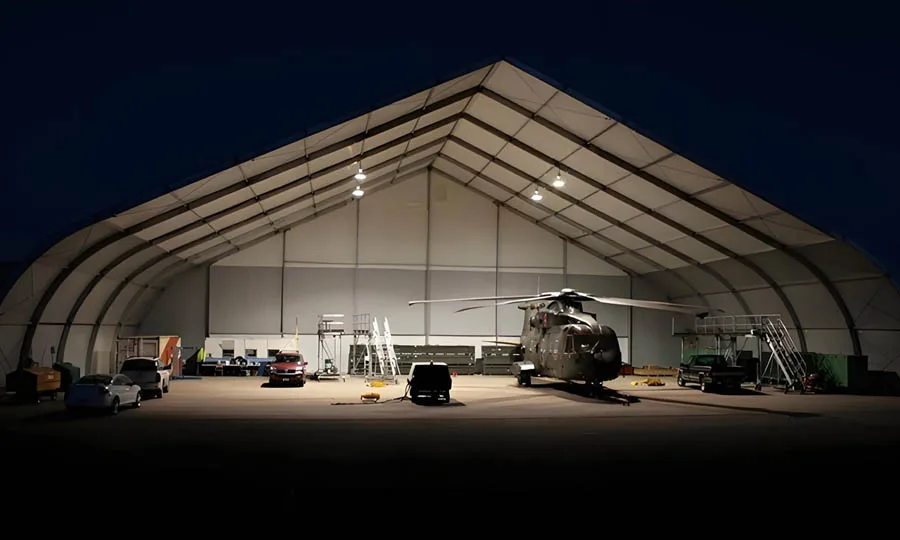
In today’s aviation industry, portable aircraft hangars have become an essential solution for aircraft owners seeking flexible and cost-effective storage options. These innovative structures offer superior protection compared to traditional open-air parking while being significantly more affordable than permanent hangar facilities.
Portable aircraft hangars are designed to withstand various weather conditions, from scorching sun to heavy snowfall, ensuring your valuable aircraft remains in pristine condition. Whether you own a small private plane, helicopter, or even a business jet, there’s a portable aircraft hangar solution to meet your specific needs.
The market for portable aircraft hangar for sale has grown exponentially in recent years, with manufacturers developing increasingly sophisticated designs that rival permanent structures in durability and protection. This comprehensive guide will explore everything you need to know before purchasing your Portable Aircraft Hangar, including detailed price comparisons, material options, and real-user reviews.
Why Choose a Portable Aircraft Hangar?
Cost Savings Compared to Traditional Hangars
One of the most compelling reasons to consider a portable aircraft hangar is the significant cost advantage over conventional structures:
- Construction Costs: Permanent hangars typically cost $200-$350 per square foot to build, while portable options range from $50-$100 per square foot
- No Foundation Required: Most portable units don’t require expensive concrete foundations
- Tax Benefits: Many regions classify portable hangars as equipment rather than real property, offering tax advantages
- Insurance Savings: Proper aircraft storage can reduce insurance premiums by 15-25%
Flexibility and Mobility
Unlike fixed structures, portable aircraft hangars offer unparalleled flexibility:
- Relocation Capability: Move your hangar if you change airports or need temporary storage
- Expandable Designs: Many models allow for easy expansion as your fleet grows
- Temporary Installations: Ideal for airshows, military deployments, or seasonal use
- Quick Setup: Most portable units can be operational within days versus months for permanent structures
Protection Level Comparison
Modern portable aircraft hangars provide protection nearly equivalent to permanent facilities:
| Protection Feature | Portable Hangar | Permanent Hangar |
| UV Radiation | 99% blockage | 100% blockage |
| Precipitation | Full protection | Full protection |
| Wind Resistance | Up to 100 mph | Up to 150 mph |
| Temperature Control | Optional systems | Built-in systems |
| Security | Comparable | Slightly better |

Types of Portable Aircraft Hangars
Fabric Structure Hangars
The most common and affordable portable aircraft hangar option features durable fabric stretched over a metal frame:
Pros:
- Lowest cost option ($50-$100/sq ft)
- Lightweight and easy to assemble
- Excellent weather resistance
- Typically last 8-12 years
Cons:
- Less durable than hard-sided options
- Limited insulation capabilities
- More frequent maintenance required
Inflatable Hangars
These innovative portable aircraft hangars use air beams to support the structure:
Pros:
- Extremely quick deployment (often <4 hours)
- No internal support poles for unobstructed space
- Excellent for temporary applications
- Moderate cost ($20-$35/sq ft)
Cons:
- Requires continuous air pressure
- Vulnerable to punctures
- Limited lifespan (2-3 years)
Modular Metal Hangars
For those needing more permanent-feeling portable solutions:
Pros:
- Maximum durability (20+ year lifespan)
- Best security and insulation
- Can be disassembled and moved
- Professional appearance ($150-$250/sq ft)
Cons:
- Heavier components require equipment to move
- Longer setup time (1-2 months)
- Higher initial cost
Key Features to Consider
When evaluating portable aircraft hangar for sale options, pay close attention to these critical features:
Size Requirements
Proper sizing ensures adequate space for your aircraft and maintenance activities:
- Length: Aircraft length + 10-15 feet clearance
- Width: Wingspan/rotor diameter + 8-12 feet clearance
- Height: Tail height + 3-5 feet clearance
Common portable aircraft hangar sizes:
| Aircraft Type | Recommended Size |
| Cessna 172 | 15x15m |
| Robinson R44 | 20x20m |
| Beechcraft Baron | 40x40m |
| Citation CJ3 | 60x60m |
Material Quality
The best Portable Aircraft Hangar options use:
- Frames: Galvanized steel or aircraft-grade aluminum
- Covers: PVC-coated polyester (18-22 oz/sq yd)
- Hardware: Stainless steel or zinc-plated components
- Doors: Insulated roll-up or bi-fold designs
Climate Adaptability
Consider your local weather conditions:
- Hot climates: Reflective coatings and UV inhibitors
- Cold climates: Insulated liners and snow load ratings
- Windy areas: Heavy-duty anchoring systems
- Humid regions: Mold/mildew resistant fabrics
Installation Process Overview
Understanding what to expect during portable aircraft hangar installation:
Site Preparation (1-3 days)
- Clearing and leveling the area
- Installing drainage if needed
- Marking anchor points
Framework Assembly (2-5 days)
- Erecting support arches/beams
- Installing purlins and bracing
- Door frame installation
Cover Installation (1-2 days)
- Unrolling and positioning fabric
- Tensioning and securing cover
- Sealing seams and edges
Final Touches (1 day)
- Installing doors and vents
- Adding lighting and electrical
- Quality inspection
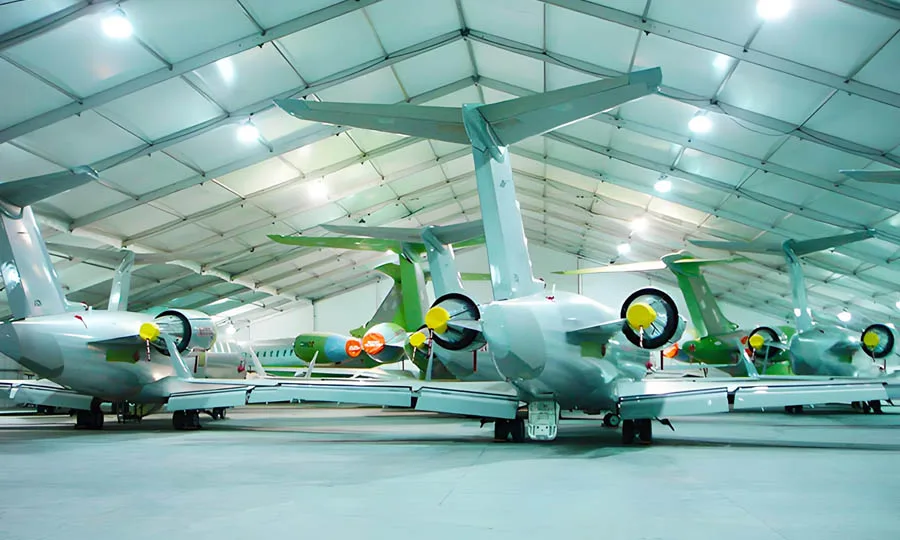
Most quality portable aircraft hangar providers offer turnkey installation services for an additional 10-20% of the hardware cost.
Maintenance Requirements
Proper care extends your portable aircraft hangar’s lifespan:
Monthly Checks
- Inspect cover for tears or abrasions
- Check anchor tension
- Clear debris from roof
- Lubricate moving parts
Seasonal Maintenance
- Deep clean cover material
- Inspect all structural components
- Check electrical systems
- Verify proper drainage
Every 5-8 Years
- Complete cover replacement
- Frame corrosion inspection
- Anchor system evaluation
- Hardware replacement as needed
Real User Experiences
We surveyed aircraft hangar owners about their experiences:
Satisfaction Ratings (1-10 scale)
- Protection from Elements: 9.2
- Ease of Assembly: 7.8
- Durability: 8.5
- Value for Money: 8.9
- Would Recommend: 92% Yes
Common Praise:
- “Saved my plane during a hailstorm”
- “Cost half of a permanent hangar”
- “Easy to relocate when I changed airports”
Frequent Complaints:
- “Door mechanisms require frequent adjustment”
- “Fabric faded after 4 years”
- “Anchoring in rocky soil was challenging”
Frequently Asked Questions
Q: How long do portable aircraft hangars last?
A: Quality units last 10-20 years with proper maintenance. Fabric covers typically need replacement every 8-12 years.
Q: Can portable hangars be insured?
A: Yes, most insurers offer coverage similar to permanent structures.
Q: Do I need permits for a portable aircraft hangar?
A: Requirements vary by location. Most areas under 1,200 sq ft don’t need permits, but always check local regulations.
Q: Can I install one myself?
A: Smaller models (under 40′) are DIY-friendly with 4-6 people. Larger units or complex sites warrant professional installation.
Q: How do portable hangars handle snow loads?
A: Quality designs support 25-50 lbs/sq ft (varies by model). Steeper roof pitches and internal supports improve snow performance.
Making Your Purchase Decision
Follow this step-by-step approach when buying your portable aircraft hangar:
- Assess Your Needs
- Aircraft dimensions
- Local weather conditions
- Intended usage period
- Budget constraints
- Research Options
- Compare 3-5 reputable manufacturers
- Read independent reviews
- Request customer references
- Get Quotes
- Detailed specifications
- Installation costs
- Warranty information
- Delivery timelines
- Evaluate Financing
- Compare loan options
- Consider tax implications
- Review lease agreements
- Plan Installation
- Site preparation
- Utility connections
- Anchoring system
- Local regulations
Conclusion
Investing in a portable aircraft hangar provides an ideal balance of protection, flexibility, and value for aircraft owners. With prices starting around $25,000 for small single-plane units up to $200,000 for large professional installations, there’s a solution for every budget and requirement.
The portable aircraft hangar market continues to innovate, with new materials and designs offering ever-improving performance. Whether you need temporary storage during construction, seasonal protection from harsh weather, or a semi-permanent solution at a remote airstrip, today’s portable options deliver remarkable capabilities.
Before purchasing your portable aircraft hangar for sale, carefully consider your specific needs, compare multiple manufacturers, and consult with other owners in your area. With proper selection and maintenance, a quality Portable Aircraft Hangar can provide decades of reliable service while protecting your valuable aviation assets.
To fully understand airplane tents, read the following article: <Hangar Aircraft Tents for Military & Civilian Use>
 EN
EN  ZH
ZH