


目录
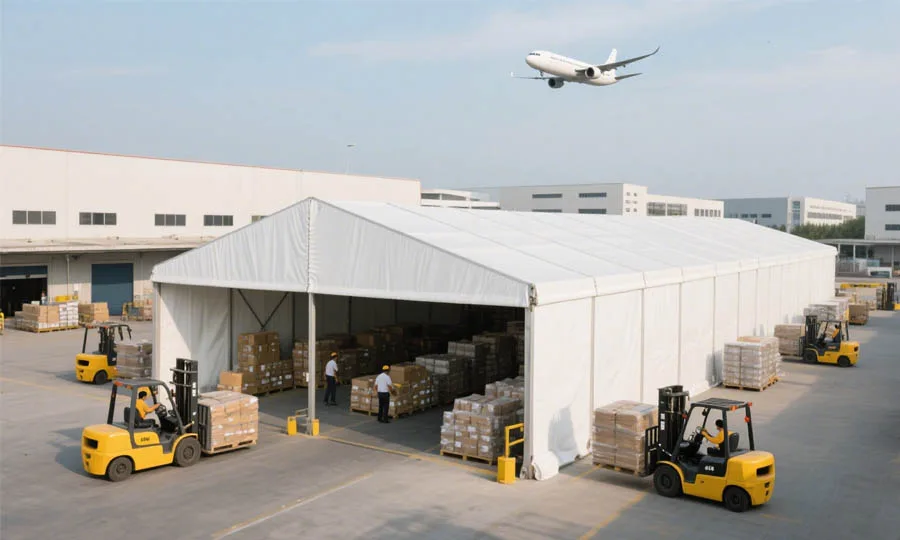
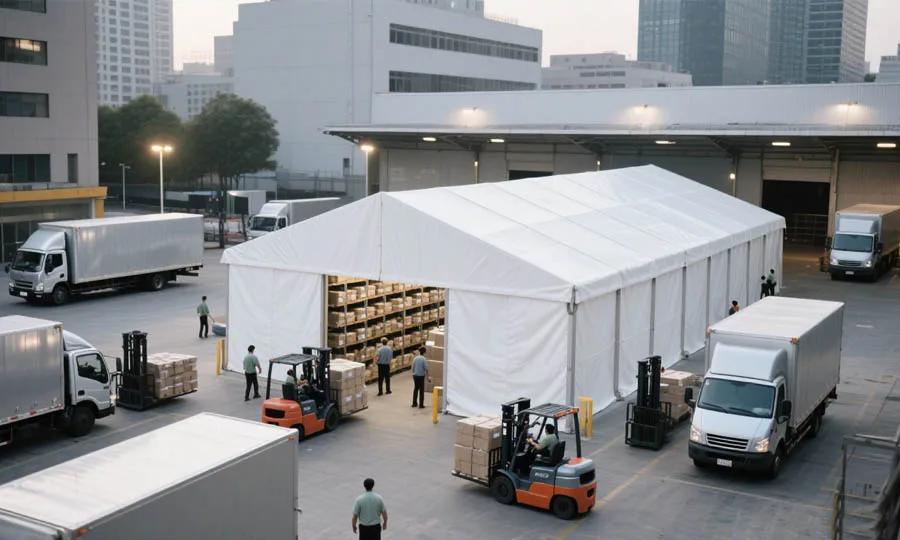
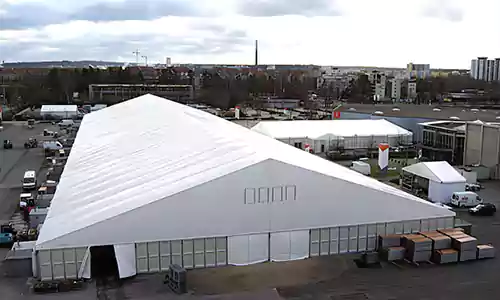
In today’s rapidly changing business landscape, temporary warehouse tent have emerged as the go-to solution for companies needing flexible, cost-effective storage space. These innovative temporary storage shelters provide all the protection of permanent structures with the added benefits of mobility, quick installation, and significant cost savings.
Key Advantages of Temporary Warehouse Tent
Temporary warehouse tents offer a cost-effective, rapidly deployable, robust, and highly adaptable solution that complements—and often surpasses—traditional storage construction. They are an ideal choice for companies seeking efficient, scalable, and sustainable operational support.
1. Significant Cost Efficiency
- Lower Initial Investment: Compared to traditional construction, warehouse tents require far less spending on land preparation, design, building materials, and labor, with simpler approval processes. Rental options further reduce financial pressure.
- Rapid Setup: Prefabricated components enable quick installation—large tents can be operational within days or weeks, greatly accelerating project timelines and capital turnover.
- Low Maintenance & High Reusability: The exteriors require no painting or structural upkeep, and the structures can be disassembled, relocated, re-leased, or resold, offering strong residual asset value.
2. Flexible Deployment Adapts to Changing Needs
- Quick Response to Business Fluctuations: Modular designs allow for easy expansion, reduction, or reconfiguration to accommodate inventory changes, production scaling, or site adjustments.
- Suitable for Various Terrains: Can be rapidly installed on sand, soil, or concrete without complex foundations, helping businesses maximize existing space.
- Portable and Redeployable: Entire structures can be dismantled and transported for use in multiple locations or overseas projects, enhancing asset utilization.
3. Durable and Reliable Structure
- Weather-Resistant & Long-Lasting: Made with high-strength aluminum or steel frames and industrial-grade PVC-coated fabric, these tents withstand wind, snow, and harsh conditions, with a service life of over 10 years.
- Engineered for Safety: Professionally anchored and designed to meet load and safety standards, including fire resistance and ventilation requirements.
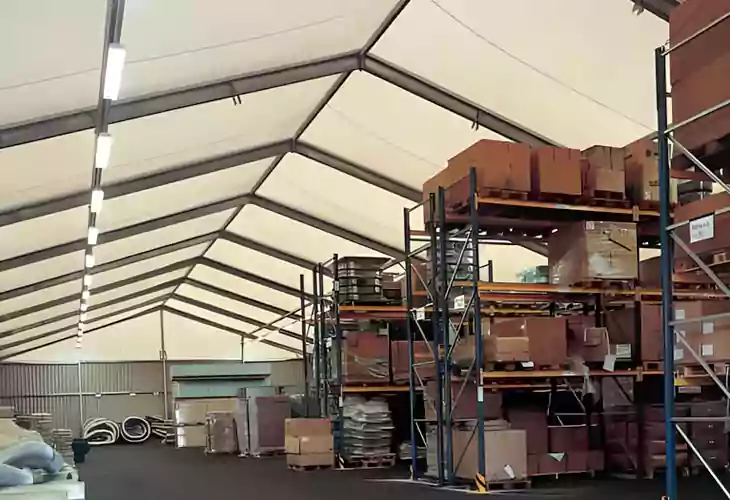
- Operational Convenience: Open layouts with roll-up doors allow smooth access for forklifts and handling equipment, improving logistics efficiency.
4. Versatile and Customizable
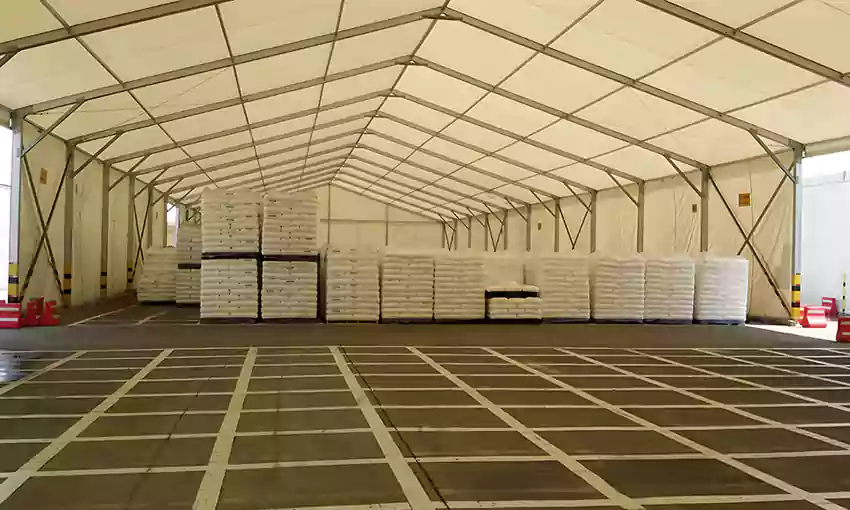
- Wide Range of Applications: Ideal for storage, logistics, temporary workshops, events, and more. Interiors can be partitioned or fitted with shelving to suit various needs.
- 定制化方案: Options include enhanced ventilation, specialized doors, and interior layouts to meet industry-specific demands.
- Expand Operational Space: Perfect for restaurants, exhibition centres, and hotels to gain extra room for events or increased capacity without disrupting existing operations.
5. Eco-Friendly and Sustainable
- Reduced Environmental Impact: Minimal site preparation and foundation work lower ecological disruption. Reusable materials decrease construction waste.
- Supports Green Operations: Helps companies meet sustainability goals by maximizing resource efficiency and reducing the need for new permanent structures.
Disadvantages of Temporary Storage Tents
1. Relatively Lower Long-Term Durability
- Not on Par with Permanent Buildings: Despite high quality, the fabric canopy and structure will typically age and deteriorate faster than reinforced concrete buildings under long-term (e.g., 10-20 years) exposure to sun, rain, and extreme weather, potentially requiring fabric or part replacements.
- Requires Regular Maintenance: The fabric may need cleaning, patching, or mildew treatment, and metal components require inspection to prevent rust, increasing long-term maintenance costs and effort.
2. Limited Environmental Control
- Poorer Insulation: Compared to traditional warehouses, tents have weaker thermal insulation (in winter) and heat resistance (in summer). In regions with extreme climates, additional AC or heating units are often needed, increasing energy costs.
- Humidity and Ventilation Control: While ventilation systems can be installed, their sealing and moisture resistance are inferior to fixed buildings. In damp, rainy areas, stored goods may require extra moisture protection.
3. Security Challenges
- Weaker Physical Protection: Fabric walls can be easily slashed with sharp tools, offering generally lower theft deterrence and physical security than brick or concrete walls. Enhanced security measures may be necessary for high-value goods.
- Upper Limit on Disaster Resistance: While designed to withstand certain wind and snow loads, their protective capability remains inferior to permanent structures in the face of extreme disasters like typhoons, heavy snowstorms, or fires.
4. Potential Regulatory and Approval Hurdles
- Not Permitted Everywhere: Zoning laws or building codes in some areas may prohibit or restrict such temporary structures, particularly near urban centers or residential zones.
- Permits May Still Be Required: Although the process is simpler, erecting large or commercial tents may still require planning permission or compliance with local safety regulations, adding extra paperwork and time costs.
Three Structures Suitable for Temporary Storage Tents
These three tent series cater to different needs: the A-Structure Series emphasizes economy and versatility, the Polygon Series meets height-sensitive storage requirements, and the Arcum Series is suitable for scenarios where both appearance and functionality matter. Users can choose the most suitable type based on the items being stored, spatial requirements, and operating environment.
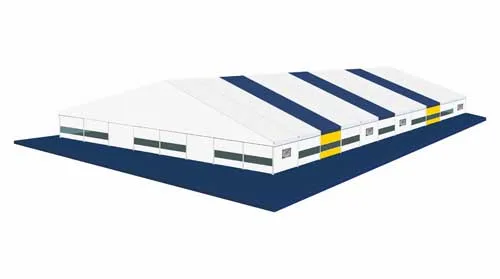
A-Structure Tents Series
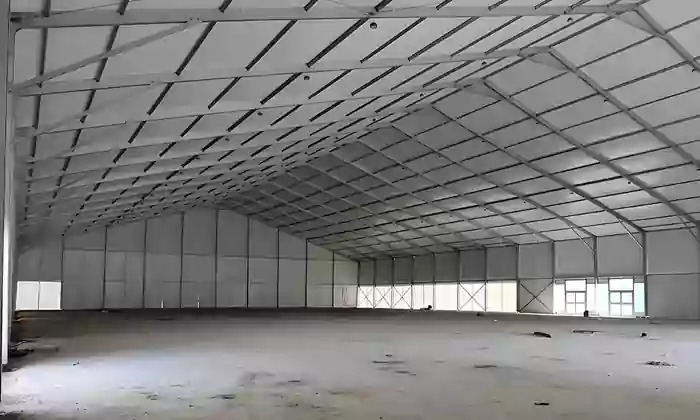
Features: Cost-effective, clear-span design, easy installation
Span Range: 10m to 60m
Ideal For: General storage, logistics hubs, temporary material shelters, light equipment storage
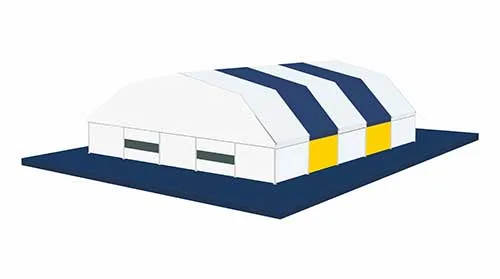
Polygon Tents Series
Features: Multi-arch structure provides greater clear height, excellent wind and snow resistance
Span Range: 10m to 60m
Ideal For: Large machinery parking, aircraft hangars, agricultural equipment storage, industrial workshops
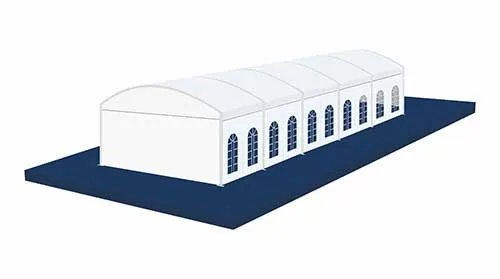
Arcum Tents Series
Features: Streamlined aesthetic design, lightweight yet robust structure, combines functionality and visual appeal
Span Range: 10m to 40m
Ideal For: Commercial storage, pop-up retail spaces, exhibition venues, sports facilities
Configuration Options for Temporary Warehouse Tent
These three configurations offer increasing levels of protection, durability, and environmental control. Open-sided tents maximize airflow and access, PVC-walled tents provide full weather resistance, and solid-wall tents deliver near-permanent structure performance. The optimal choice depends on storage duration, operational needs, and environmental conditions.
1. Open-Sided Tents
- Enclosure Type: No side walls; roof-only coverage.
- Ideal Use: Construction material storage, equipment shelter, seasonal staging areas.
- 安装时间: Rapid installation and removal.
- Additional Features: Optional windbreak netting or removable side tarps.
2. PVC-Walled Tents
- Enclosure Type: Full-height PVC vinyl walls; waterproof and UV-resistant.
- Ideal Use: Medium-term warehousing (1–3 years), inventory protection, workshop space.
- Additional Features: Roll-up doors, integrated ventilation, optional transparent window panels.
3. Solid-Wall Tents
- Enclosure Type: Insulated sandwich panels or composite walls.
- Ideal Use: Long-term storage (3–5+ years), temperature-sensitive goods, semi-permanent operations.
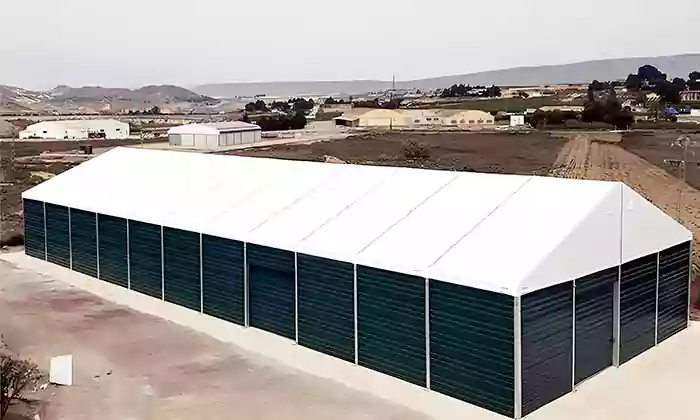
- Additional Features: Lockable doors, HVAC compatibility, electrical wiring options, interior finishing support.
Key Considerations for Purchasing Temporary Warehouse Tents
1. Define Requirements and Purpose
- Usage Scenario: Determine whether the tent will be used for storage and logistics, production workshops, construction sites, or temporary events. Different scenarios require varying structural and protection specifications.
- Duration of Use: Short-term (<1 year), medium-term (1–3 years), or long-term (>3 years). This directly impacts configuration choices (e.g., PVC fabric or solid wall panels).
- Type of Items Stored: Whether the tent will house precision equipment, moisture-/sun-sensitive goods, or hazardous materials. This dictates needs for sealing, temperature control, and fire resistance.
2. Structure and Performance Parameters
- Dimensions and Span: Based on site size and storage capacity, determine the required span (e.g., 30m) and eave height (e.g., 6m) to ensure sufficient interior space for operations (e.g., forklift access).
- Wind and Snow Load Resistance: Check local maximum wind and snow load data to ensure the tent’s structural design (e.g., frame material, reinforcement methods) meets safety standards.
- 主要材料: Prioritize high-strength aluminum alloy (rust-proof, lightweight) or hot-dip galvanized steel (high load-bearing capacity, cost-effective) for durability.
- Premium Structural Steel:Temporary warehouse tent are crafted with superior structural carbon steel square bar, delivering not only a sleek, modern appearance but also outstanding strength, durability, and stability. These high-quality raw materials are sourced from HYT and include trusted Chinese national standard grades such as Q235 and Q335. By choosing internationally recognized materials, A-Tent ensures every tent meets the highest safety and performance requirements. Explore HYT’s steel bar products to see the premium square steel that powers temporary warehouse tent reliable structures.
- Fabric Material: Choose high-density, double-sided PVC-coated polyester fabric with UV resistance, waterproofing, and flame-retardant (e.g., B1-grade) properties.
3. Configuration and Functional Options
- Sidewall Type: Open-sided (roof only), PVC roll-up walls (weatherproof and ventilated), or solid insulated walls (thermal and acoustic insulation). Select based on environmental needs.
- Door Design: Double-opening forklift doors, single pedestrian doors, or roller shutters to ensure logistical efficiency and accessibility.
- Additional Systems: Determine whether integrated ventilation, drainage, internal lighting, or electrical wiring is required.
4. Supplier and After-Sales Service
- Supplier Qualifications: Choose manufacturers with ISO certification and extensive industry experience, providing structural calculations and compliance documentation.
- Installation and Training: Confirm whether professional installation services or detailed guidance (e.g., videos, manuals) are offered.
- Warranty and Support: Clarify warranty terms for the main frame, fabric, and components and emergency maintenance response.
5. Cost and Compliance
- Total Cost of Ownership: Compare overall expenses, including product price, transportation, installation, maintenance, and resale value, rather than focusing solely on the initial quote.
- Regulatory Compliance: Consult local authorities in advance to confirm requirements for temporary structure permits and fire safety approvals (e.g., fire separation distances, evacuation routes) to avoid compliance risks.
Industry Applications
Temporary warehouse tents have become the preferred solution for various industries dealing with sudden demand, seasonal peaks, and space shortages through their rapid deployment, cost controllability, and customizable space. Different industries can select protection levels, enclosure structures, and functional accessories according to specific needs to achieve efficient and flexible space utilization.
1. Manufacturing Sector
- Raw Material Buffer Storage: Resolves raw material accumulation issues caused by supply chain fluctuations, preventing production line shortages.
- Production Line Expansion: Rapidly constructs temporary production areas to meet capacity increase demands during peak order seasons.
- Temporary Finished Goods Storage: Addresses finished product inventory pressure resulting from production-sales imbalances or logistics delays.
2. Logistics & Distribution
- Seasonal Inventory Overflow: Temporary sorting centers and storage expansion for e-commerce promotions and holiday peak seasons.
- Cross-Docking Operation Areas: Provides weather-protected transshipment space across docks to optimize loading and unloading efficiency.
- Cross-Border E-Commerce Bonded Warehouses: Flexibly deploys compliant temporary storage facilities within bonded zones.
3. Construction Industry
- Large Equipment Parking: Protects equipment such as cranes and excavators from weather exposure, extending service life.
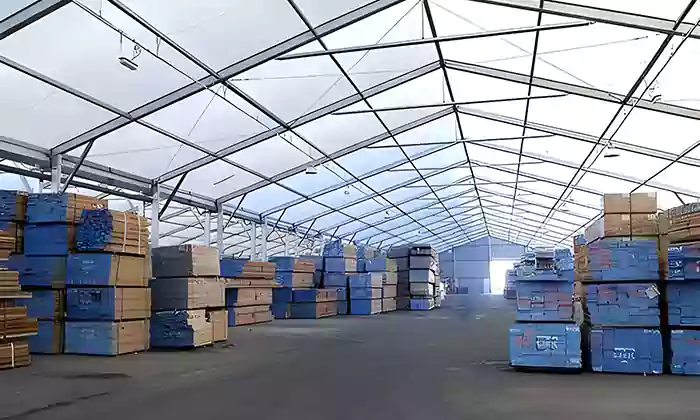
- Building Material Protective Storage: Stores cement, steel, decorative materials, etc., ensuring quality through moisture and dust prevention.
- Temporary Site Offices: Integrates power and network interfaces to serve as construction site command centers and rest areas.
4. New Energy Sector
- Temporary Solar Panel Storage: Prevents efficiency loss of silicon components due to environmental factors during transportation.
- Wind Turbine Blade Pre-Assembly Areas: Provides sheltered spaces for assembly and inspection of blades up to hundreds of meters long.
- EV Charging Station Shelters: Offers rain and snow protection solutions for outdoor charging stations.
5. Emergency & Public Services
- Disaster Relief Material Distribution Centers: Rapidly establishes emergency supply distribution hubs within 72 hours during disasters.
- Mobile Maintenance Workstations: Provides mobile storage solutions for road maintenance equipment and tools used by municipal engineering teams.
案例
结论
For businesses needing flexible, cost-effective storage solutions, temporary warehouse tents offer the perfect balance of protection, affordability, and convenience. Whether you need short-term space for a seasonal surge or a semi-permanent solution while expanding facilities, A-Tent’s temporary industrial storage solutions tents deliver outstanding performance without the high costs and long lead times of traditional construction.
READ MORE : < 仓库帐篷出售 | 经济、耐用、快捷 >
 ZH
ZH  EN
EN