


目录
Chapter 1: The Business Psychology Value of Transparent Spaces
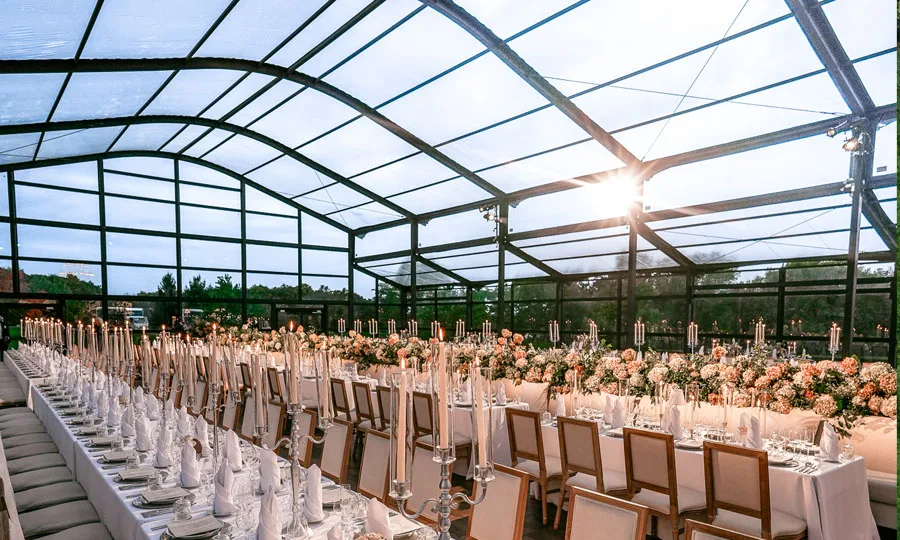
In the high-end wedding planning industry, glass tents are creating a completely new sales paradigm. These luminous architectural structures—whether referred to as glass wedding tents or atrium tents—are transforming traditional sales processes. When potential clients first step into such a space, their decision-making psychology undergoes subtle changes across three stages:
First is the Spatial Awe Phase. The 6-8 meter high ceilings combined with 360-degree panoramic views immediately elicit exclamations of wonder. Research from a renowned wedding planning agency shows that 83% of clients will involuntarily gasp or start taking photos within the first 30 seconds of entering a glass tent.
Next comes the Emotional Resonance Phase. Natural light filtering through specially treated glass creates a unique “soft light effect.” This lighting reduces psychological defenses, making clients more receptive to planners’ suggestions. Neuroscience research confirms decision-making speed increases by 40% in such environments.
Finally arrives the Vision Building Phase. Unlike traditional enclosed venues, the transparent nature of glass wedding tents allows clients to spontaneously imagine scene setups—over 65% will actively point out “this is where the altar could go” or “that area would be perfect for photos.”
Detailed understanding of Atrium Tents : < 4 款最佳中庭帐篷及其用途 >

Chapter 2: The Four-Dimensional Sales Matrix of Glass Tents
1. Visual Persuasion System
Every structural detail of glass tents serves as a silent salesperson:
- Aircraft-grade aluminum framework showcases industrial aesthetics
- Seamless glass joining techniques demonstrate exquisite craftsmanship
- Smart lighting systems highlight technological sophistication
2. Spatial Mood Engine
Guide client emotions by controlling:
- Morning visits: Convey hope
- Noon experiences: Emphasize practicality
- Dusk presentations: Create romantic ambiance
3. Value Transmission Mechanism
Transform glass wedding tent cost into tangible value:
- Display material cross-section samples
- Compare with traditional venue modification fees
- Demonstrate rapid setup processes
4. Social Currency Creation
Design exclusive “Instagrammable spots”:
- Sky mirror flooring
- Light corridor installations
- Floating floral arrangements
Chapter 3: Premium Client Conversion Strategies
Phase 1: Scenario-Based Invitations
Replace traditional conference room meetings with:
“We cordially invite you to experience a private twilight preview at our glass garden tent at sunset”
Phase 2: Immersive Experience Design
- Create a “Time Tunnel” entrance showcasing light transformation videos
- Leave central areas blank, only marking key functional zones
- Install interactive screens displaying real-time weather simulations
Phase 3: Tangible Value Presentation
Develop a “Transparent Cost Calculator” tool:
- Input guest count
- Select season/time
- Generate 3D renderings
- Display cost comparisons with traditional venues
Chapter 4: The Golden Rules for Handling Price Objections
When clients question glass tent wedding cost, employ the “3D Response Method”:
Differentiate
Highlight unique advantages:
- Eliminates additional lighting design needs
- Saves venue modification costs
- Reduces floral decoration budgets
Document
Provide:
- Client testimonial videos
- Venue utilization analytics
- Social media performance data
Chapter 5: From Sales to Brand Elevation
Transform glass tents into brand assets:
1. Content Production Hub
- Regular “Transparency Salon” events
- Light art exhibitions
- AR virtual scene library development
2. Industry Education Platform
- Publish “Transparent Aesthetics White Papers”
- Host tent technology symposiums
- Certification training systems
3. Social Media Node
Design viral-worthy:
- Annual thematic installations
- Seasonal limited experiences
- Celebrity collaboration projects
Frequently asked questions
What is an Atrium Tent?
Atrium tents are characterized by their high ceilings and open interiors, offering a spacious, adaptable, and visually appealing structure. These tents are ideal for weddings, corporate events, and large social gatherings, providing a grand yet welcoming atmosphere. Large windows or translucent panels allow natural light to fill the space, seamlessly connecting the interior with the outdoors.
Why Use a Tent for a Special Event?
Event tents offer flexibility, shelter, and the ability to customize the space to match the event’s theme and requirements. A uniquely designed tent can be decorated, lit, and furnished to enhance the guest experience. They allow events to take place outdoors or in unconventional settings while ensuring comfort and protection from the elements.
How to Choose the Right Atrium Tent for Your Event?
When selecting an atrium tent, consider the event’s size and layout. Ensure the tent can comfortably accommodate the number of guests and the type of activities planned. Assess the venue’s ground conditions, available space, and any specific requirements. Opt for a tent with clear panels, high ceilings, and customizable interiors to complement the occasion’s theme and ambiance.
What Size Tent is Needed for a 100-Guest Event?
The tent size depends on the event type and seating arrangement:
Cocktail Reception: A smaller tent (800 to 1,000 sq. ft.) may suffice if guests will primarily be standing and mingling.
Seated Dinner: A 1,200 to 1,500 sq. ft. tent is recommended to accommodate tables, chairs, a dance floor, and other amenities.
What’s the Difference Between an Atrium Tent and a Clear-Span Tent?
he key differences lie in their design and structural features:
Function & Aesthetics: Atrium tents are popular for upscale events due to their luxurious ambiance. Clear-span tents are ideal for exhibitions, trade shows, and large conferences, offering a functional, open space free of interior obstructions.
Design: Atrium tents feature high ceilings, open interiors, and translucent panels or windows for abundant natural light, creating an elegant and grand aesthetic. Clear-span tents have a more traditional design with no internal support poles, maximizing unobstructed space.
Structure: Clear-span tents use a frame-based design with no interior columns, making them highly versatile for various layouts. Atrium tents often include center poles separating the main space from the sides.
Let us know if you need further assistance—we’re happy to help!
 ZH
ZH  EN
EN