


Table of Contents
Introduction to Modern Fabric Hangar Solutions
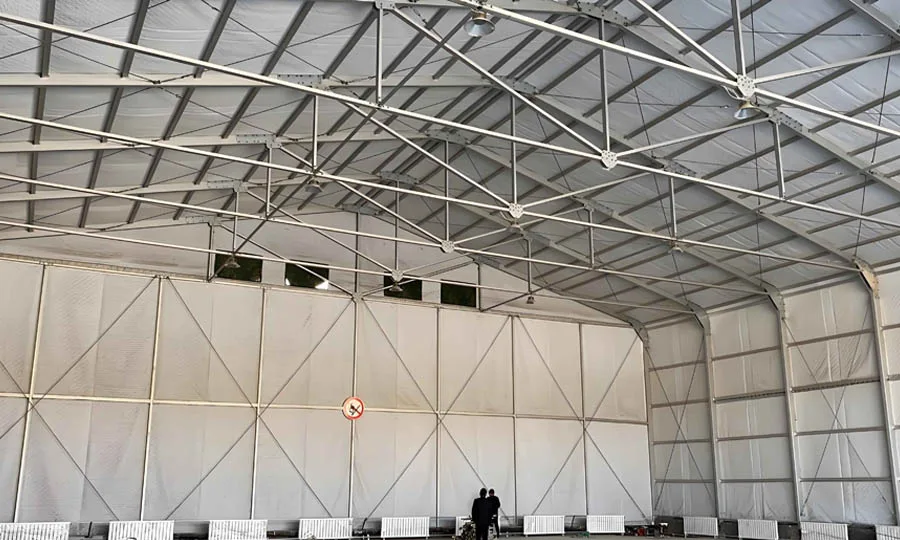
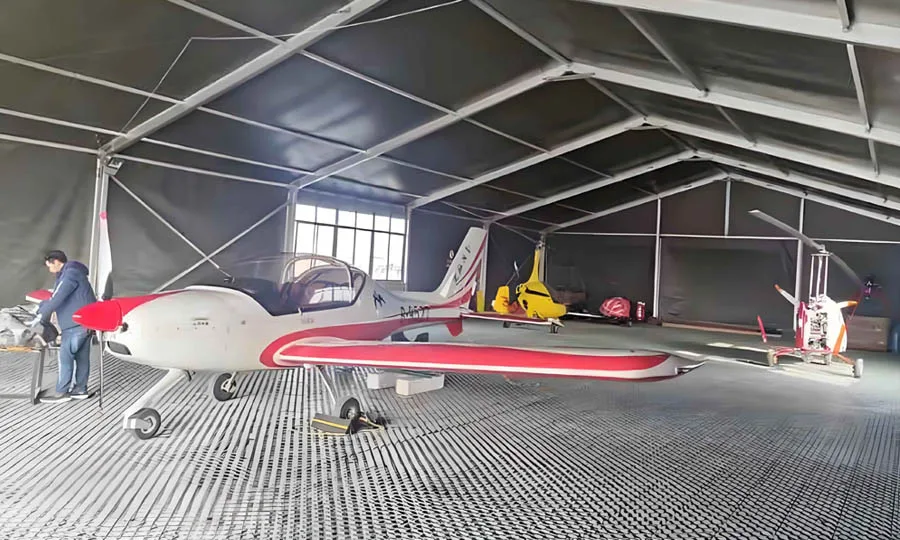
In the aviation industry, fabric hangars have emerged as a game-changing alternative to traditional metal structures. These innovative tension fabric hangar solutions combine lightweight durability with exceptional weather protection, offering aircraft owners and operators a cost-effective way to shelter their valuable assets. Unlike conventional buildings, fabric aircraft hangar structures utilize high-performance PVC membranes stretched over sturdy aluminum or steel frames, creating spacious, column-free environments perfect for housing planes of all sizes.
The advantages of fabric airplane hangar solutions are numerous:
40-50% cost savings compared to traditional construction
Installation times measured in weeks rather than months
Customizable designs to accommodate any aircraft
Superior corrosion resistance in coastal environments
Natural daylighting reduces energy costs
At A-Tent, we’ve pioneered advanced fabric aviation hangar construction techniques that deliver permanent-building performance at temporary-structure prices. Our focus on PVC membrane technology ensures your aircraft receives the best possible protection from sun, rain, wind, and other environmental factors.
The Science Behind PVC Fabric for Aircraft Hangars
What Makes PVC Ideal for Hangar Applications?
Polyvinyl chloride (PVC) coated fabrics represent the gold standard for fabric hangar construction due to their unique combination of properties:
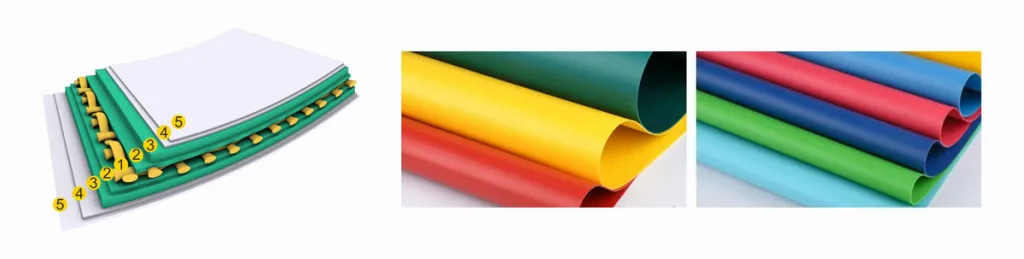
Material Composition:
- Base fabric: High-tenacity polyester yarn (1100 dtex)
- Coating: Flexible PVC with UV stabilizers
- Surface treatment: Acrylic lacquer for self-cleaning
Key Performance Characteristics:
- Tensile strength: 2500-3000 N/5cm (DIN ISO 1421)
- Tear resistance: 250-350 N (DIN 53363)
- Weight: 550-850 g/m² (DIN EN ISO 2286-2)
- Thickness: 0.45-0.65 mm (DIN EN ISO 2286-3)
UV Protection Mechanisms in PVC Membranes
The sun’s ultraviolet radiation poses one of the greatest threats to aircraft surfaces and components. Our fabric aircraft hangar membranes incorporate multiple UV protection layers:
- UV Absorbers: Special additives that absorb harmful radiation
- Reflective Pigments: Titanium dioxide particles that scatter UV rays
- Stabilizer Package: Hindered amine light stabilizers (HALS) prevent degradation
- Surface Treatment: Acrylic coating provides additional UV filtration
This multi-layer defense system blocks 99% of UV radiation while maintaining the fabric’s flexibility and strength over years of sun exposure.
Technical Specifications of Aircraft Hangar PVC
Material Properties Comparison
| Property | SZATentech PVC | Standard PVC | PTFE Coated Fiberglass |
|---|---|---|---|
| UV Resistance | Excellent (15+ years) | Good (8-10 years) | Excellent |
| Tensile Strength | 3000 N/5cm | 2200 N/5cm | 4000 N/5cm |
| Weight | 850 g/m² | 650 g/m² | 1200 g/m² |
| Light Transmission | 5-10% | 5-10% | 12-18% |
| Fire Rating | B1 (DIN 4102) | B2 | A2 |
| Temperature Range | -30°C to +70°C | -20°C to +60°C | -70°C to +250°C |
Certified Performance Standards
Our fabric airplane hangar membranes meet or exceed:
- EN 13501-1: Fire classification (B-s1,d0)
- ISO 4892-3: UV resistance (672 hours, Grade 5)
- DIN 4102 B1: Flame retardancy
- NFPA 701: Fire propagation
- ASTM G21: Anti-fungal properties
Advantages of PVC Fabric Hangars
Superior Aircraft Protection
Fabric aviation hangar construction provides better protection than traditional options:
Sun Protection:
- Prevents paint fading and oxidation
- Reduces cockpit instrument damage
- Minimizes rubber component degradation
Weather Resistance:
- Withstands 100 km/h winds
- Handles snow loads up to 0.1 kN/m²
- Completely waterproof design
Environmental Benefits:
- Natural daylight reduces lighting needs
- Excellent insulation properties
- No condensation issues
4.2 Cost and Time Savings
Compared to metal aircraft hangar, tension fabric hangar solutions offer:
| Factor | PVC Fabric Hangar | Metal Hangar |
|---|---|---|
| Construction Time | 2-4 weeks | 6-12 months |
| Foundation Costs | 30%-50% of metal | 100% |
| Maintenance | Annual inspection | Frequent painting |
| Relocation | Possible | Impossible |
| Lifespan | 10-15 years | 30-40 years |
Custom Hangar Solutions
Every fabric hangar we build is customized for specific aircraft requirements:
Size Options:
- Small: 20m span (for private aircraft)
- Medium: 40m span (regional jets)
- Large: 60m+ span (commercial aircraft)
Door Configurations:
- Sliding doors
- Bi-fold doors
- Hydraulic lift doors
Additional Features:
- Insulated options for cold climates
- Fire suppression systems
- Lighting and electrical packages
- Ventilation systems
Maintenance and Longevity
Properly maintained, our fabric airplane hangar solutions deliver:
Maintenance Schedule:
- Annual inspection of fabric and frame
- Periodic cleaning with mild detergent
- Snow removal when accumulation exceeds rating
Expected Lifespan:
- PVC membrane: 10-15 years
- Aluminum frame: 25+ years
- Hardware: 10-15 years
Replacement Cycle:
- Membrane can be replaced without dismantling frame
- Typically 1-2 day process
- Cost approximately 30% of original installation
Why Choose A-Tent for Your Hangar?
20 Years of Specialization:
- Over 100 fabric aviation hangar construction projects completed
Quality Assurance:
- All materials aircraft-grade
- Strict quality control at every production stage
- Comprehensive 1-year warranty
Complete Service:
- Site evaluation and planning
- Engineering and permitting support
- Turnkey installation worldwide
Conclusion
Modern fabric hangar solutions represent the smart choice for aircraft protection, combining military-grade durability with cost-effective construction. SZATentech’s advanced PVC membranes provide superior UV and weather protection while offering flexibility that traditional structures can’t match. Whether you need to shelter a single private plane or an entire fleet, our tension fabric hangar solutions deliver outstanding performance at a fraction of conventional construction costs.
Frequently Asked Questions
A standard 40×40 ft (12×12 m) aircraft hangar typically ranges from $30,000 to $50,000 for basic construction, with final costs depending on:
Materials – Steel-framed vs. fabric-covered structures
Doors – Manual (cheaper) vs. hydraulic/automated systems
Site Prep – Concrete foundation, drainage, and utility hookups
Location – Regional labor rates and permit fees
Curved hangar roofs serve both aerodynamic and structural purposes:
Wind Deflection – The arched shape acts like an airfoil, smoothly diverting high winds (up to 100km/h) over the structure to reduce pressure loads.
Snow/Rain Shedding – The downward slope from the center prevents accumulation of precipitation.
Structural Strength – Arches naturally distribute weight more efficiently than flat roofs, allowing wider spans without internal supports.
To fully understand airplane tents, read the following article: <Hangar Aircraft Tents for Military & Civilian Use>
 EN
EN  ZH
ZH